Instrumentation | PLC | Tutorials— Click here to visit
If you work in engineering, manufacturing, or even advanced HVAC, you’ve likely faced “The Question.” You have a process, it gets hot (or cold), and you need to know exactly how hot.
You open the catalog, and there they are: Thermocouples and RTDs.
At a glance, they look similar—metal probes that stick into pipes or ovens. But under the hood, they are chemically and electrically worlds apart. Choosing the wrong one can mean inaccurate data, ruined batches, or melted sensors.
In this guide, we are going to break down the differences, starting with the absolute basics and moving into the advanced engineering nuances. Let’s settle this debate once and for all..
Part 1: The Basics (For the Beginner)
Before we talk about voltage and coefficients, let’s just look at personalities.
The Thermocouple: “The Rugged Explorer”
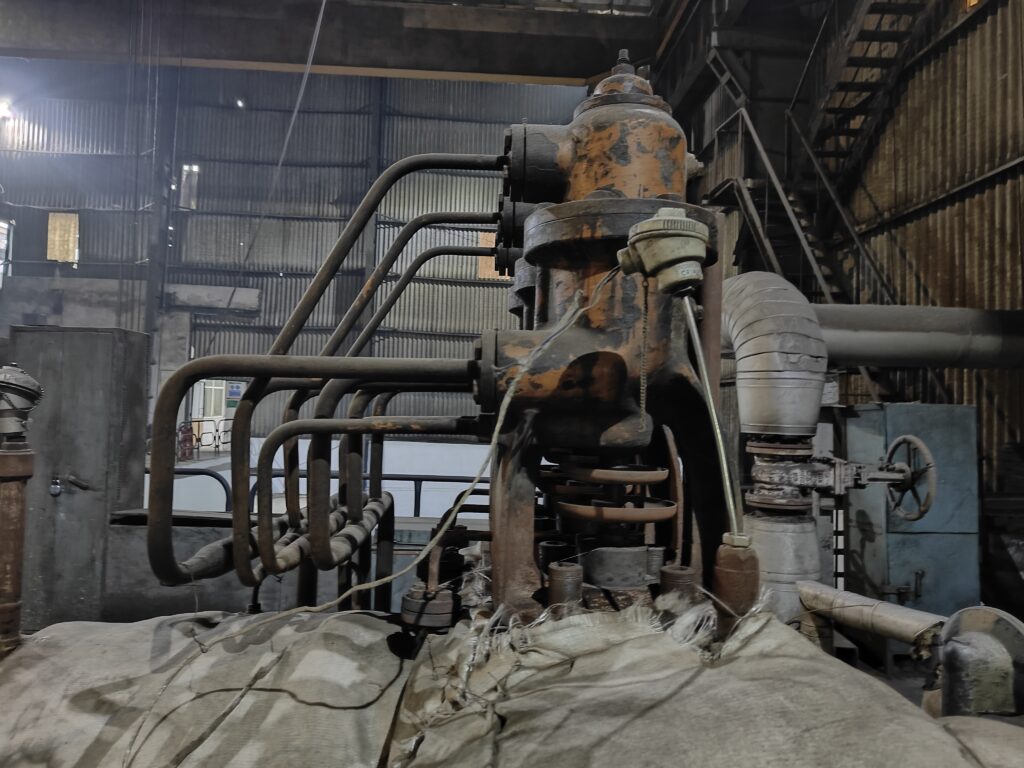
Think of a Thermocouple as a rugged, off-road vehicle. It isn’t the smoothest ride, and it might miss the exact center of the lane by a few inches, but it can go places nothing else can.
Weakness: It’s not the most precise instrument in the shed.
Best feature: It can handle extreme heat (think jet engines and blast furnaces).
-
The RTD: “The Perfectionist Accountant”
The RTD (Resistance Temperature Detector) is like a luxury sedan driven by a mathematician. It is smooth, incredibly accurate, and reliable. However, if you drive it into a volcano, it will fail.
-
Best feature: Incredible accuracy and repeatability.
-
Weakness: It’s fragile, slower, and can’t handle extreme high temperatures.
-
Part 2: How They Work (The Science)
Here is where the magic happens. They measure temperature using entirely different laws of physics.
1. Thermocouple: The Seebeck Effect
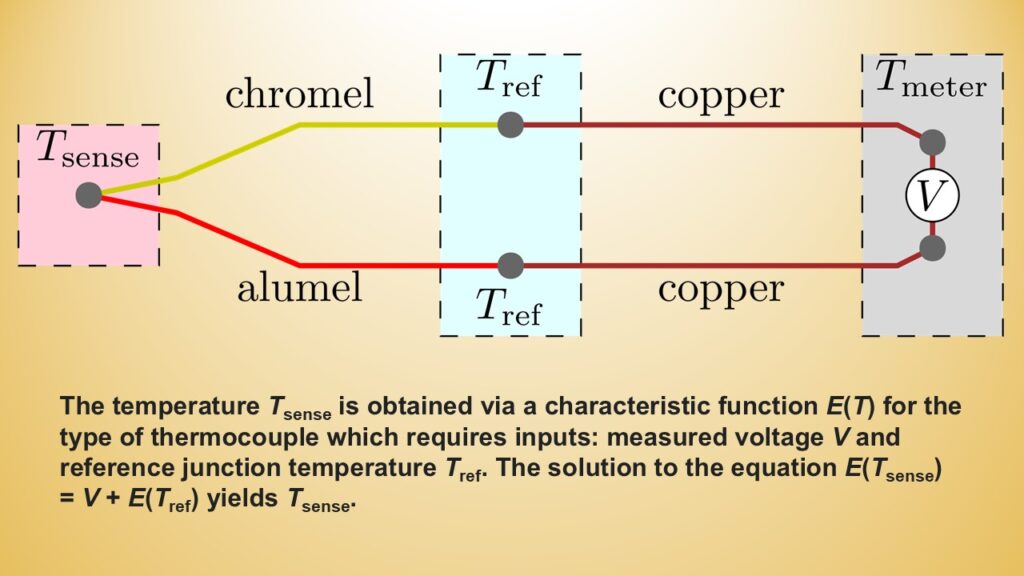
A thermocouple is deceptively simple. It is literally just two wires made of different metals joined at one end.
When that joined end (the “hot junction”) is heated, it creates a tiny voltage signal relative to the other end (the “cold junction”). This is known as the Seebeck Effect.
The voltage generated is proportional to the temperature difference:
V Propotional to Delta T
The device reads this millivolt signal and converts it into a temperature reading.
2. RTD: Resistance Change
RTD stands for Resistance Temperature Detector.
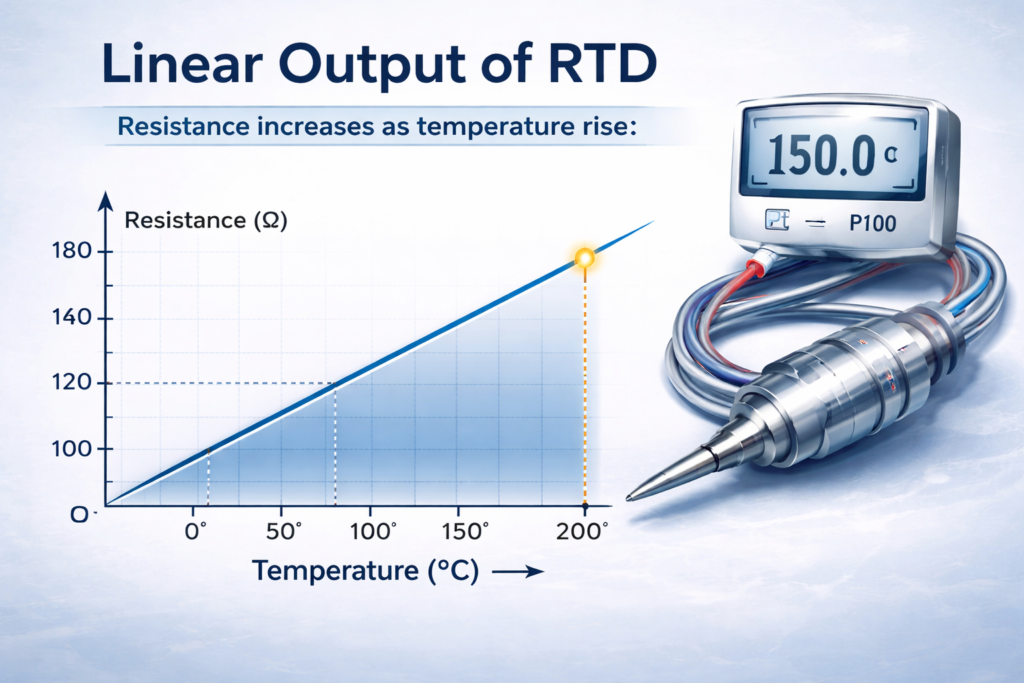
As metals get hotter, it becomes harder for electricity to pass through them—their electrical resistance increases. An RTD is essentially a very precise resistor (usually made of Platinum).
The controller sends a tiny electrical current through the sensor and measures how much resistance it faces. The most common type is the Pt100, which means it has a resistance of 100 Ohms at 0°C.
Part 3: The Showdown (Comparison)
Let’s put them head-to-head on the metrics that actually matter to you.
Round 1: Temperature Range 🌡️
- Thermocouple Wins: If you are measuring anything above 850°C, you generally must use a thermocouple. Tungsten-Rhenium thermocouples can go up to 2300°C.
- RTD Limits: RTDs usually max out around 600°C (industrial class) or 850°C (specialty class).
Round 2: Accuracy and Stability 🎯
- RTD Wins: An RTD is much more accurate (typically 0.1 °C to 0.5 °C). More importantly, they are stable over time. They don’t drift much.
- Thermocouple Issues: Thermocouples are less accurate (typically 1 °C to 4 °C. Over time, the chemical nature of the wires changes (aging), causing the reading to drift.
Round 3: Response Time ⚡
- Thermocouple Wins: Because the sensing point is just two twisted wires, it is very small. It reacts to temperature changes almost instantly.
- RTD Lags: The platinum element is usually encased in ceramic or glass, which acts as insulation. It takes longer to register a change in heat.
Round 4: Cost 💰
- Thermocouple is Cheaper: Simple wire is cheap to make.
- RTD is Pricey: Platinum is expensive, and the manufacturing process is complex.
Summary Table
| Feature | Thermocouple | RTD (Pt100) |
| Range | 270°C to 2300°C | 200°C to 850°C |
| Accuracy | Good | Excellent |
| Response Time | Fast | Slower |
| Drift | High (needs frequent calibration) | Low (very stable) |
| Vibration | Rugged | Fragile (wire can break) |
| Cost | Low | High |
Part 4: Advanced Engineering Considerations
If you are an engineer designing a system, basic “Hot vs. Cold” isn’t enough. Here are the advanced factors you need to consider.
1. The “Cold Junction” Problem
Thermocouples measure the difference in temperature between the probe tip and the connection point (where it plugs into your device). If the room temperature changes, the reading changes.
- The Fix: You need “Cold Junction Compensation” (CJC) in your electronics to calculate the ambient temperature and subtract it. If your CJC is bad, your thermocouple reading is bad. RTDs do not have this problem.
2. Lead Wire Resistance (The 3-Wire Rule)
Because RTDs measure resistance, the resistance of the cables connecting the sensor to the display can mess up the reading.
- The Fix: This is why you see 3-wire or 4-wire RTDs. The extra wires are used to measure the resistance of the cable itself and subtract it from the total, isolating the sensor’s reading. Thermocouples don’t suffer from this as much because they measure voltage, not resistance.
3. Linearity
- RTD: The change in resistance is fairly linear. It’s easy for computers to process.
- Thermocouple: The voltage curve is non-linear (it’s distinctively “S” shaped). Your controller needs complex algorithms to linearize the signal.
The Verdict: Which one should you choose?
Choose a Thermocouple if:
- Temperatures are above 600°C.
- There is heavy vibration (e.g., inside a compressor or engine).
- You need an extremely fast response time.
- Budget is the primary constraint.
Choose an RTD if:
- You are in the food, pharma, or lab industry where precision is critical.
- You are measuring relatively low temperatures (200°C to 500 °C).
- You need the reading to stay accurate for years without re-calibration.