
🚀 We’ve moved! This website is now available atInstrumentation | PLC | Tutorials— Click here to visitA practical engineer’s comparison with clear decision logic
Selecting a flowmeter is not about choosing the most accurate device, but the right device for the process story—fluid behavior, installation reality, and long-term reliability.Let’s walk through each major technology the way an instrumentation engineer encounters them on-site.
Coriolis Mass Flowmeters
Working Principle – A Coriolis flowmeter works on the Coriolis effect. One or two tubes are vibrated at their natural frequency.
As fluid flows through the vibrating tubes, Coriolis forces cause a slight twisting of the tube. Sensors detect the resulting phase shift between the inlet and outlet.
This phase shift is directly proportional to the mass flow rate.
Where: 𝐹𝑐= Coriolis force
m = mass flow rate
v = fluid velocity
ω = angular velocity of vibrating tube
Performance Characteristics
- Direct mass flow measurement
- Measures density and temperature
- Extremely stable over time
Advantages and Limitations
✅ Highest accuracy
✅ Independent of fluid properties
❌ Expensive
❌ Sensitive to vibration and mounting stress
📖 Story: When billing matters more than excuses, Coriolis never argues—it just reports the truth.
Positive Displacement (PD) Flowmeters
Working Principle – A Positive Displacement flowmeter measures flow by trapping fixed volumes of fluid and counting how many times those volumes pass through the meter.
Each rotation or movement corresponds to a known volume, and the total count represents the flow rate.
Key Relation:
Where:
Q = volumetric flow rate
N = number of measured cycles
V = volume per cycle
➡️ Flow is measured directly, not inferred.
Performance Characteristics
Works well with viscous fluids
True volumetric measurement
Excellent at low flow rates
Advantages and Limitations
✅ Very high accuracy
✅ Ideal for dosing & batching
❌ Moving parts → maintenance
❌ Not suitable for dirty fluids
📖 Story: PD meters are accountants—precise, methodical, but they don’t like dust in their books.
Ultrasonic Flowmeters
Working Principle – Ultrasonic flowmeters use high-frequency sound waves transmitted both with and against the direction of flow.
The difference in transit time between the two signals is used to calculate fluid velocity, which is then converted into flow rate.
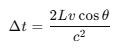
Where:
Δt = time difference
L = distance between transducers
v = fluid velocity
c = speed of sound in fluid
θ = sound path angle
➡️ Higher flow = larger time difference.
Performance Characteristics
Velocity-based measurement
No obstruction in pipe
Ideal for slurries
Advantages and Limitations
✅ No pressure loss
✅ Handles dirty & corrosive fluids
❌ Only for conductive liquids
❌ Needs full pipe condition
📖 Story: In wastewater plants, magmeters work where others simply refuse.
Turbine Flowmeters
Working Principle – In a turbine flowmeter, the flowing fluid causes a rotor or turbine to spin.
The rotational speed of the turbine is proportional to the flow velocity. Sensors detect the rotation and calculate flow rate.
Key Relation:
Where:
- Q = volumetric flow
- f = pulse frequency
- K = meter factor
➡️ Flow rate ∝ turbine speed.
Performance Characteristics
- Fast response
- High repeatability
- Best for clean fluids
Advantages and Limitations
✅ Compact & accurate
✅ Good for hydrocarbons
❌ Moving parts wear
❌ Sensitive to viscosity changes
📖 Story: Turbine meters love clean fuel—but hate surprises.
Electromagnetic Flowmeters (Magmeters)
Working Principle – Magnetic flowmeters operate based on Faraday’s Law of Electromagnetic Induction.
When a conductive liquid flows through a magnetic field, it generates a voltage proportional to its velocity.
This voltage is measured by electrodes and converted into a flow rate.
Key Relation:
Where:
- E = induced voltage
- B = magnetic field strength
- D = pipe diameter
- v = fluid velocity
➡️ No moving parts, no pressure loss.
Performance Characteristics
- Velocity-based measurement
- No obstruction in pipe
- Ideal for slurries
Advantages and Limitations
✅ No pressure loss
✅ Handles dirty & corrosive fluids
❌ Only for conductive liquids
❌ Needs full pipe condition
📖 Story: In wastewater plants, magmeters work where others simply refuse.
Vortex Flowmeters
Working Principle – A vortex flowmeter uses a bluff body placed in the flow path.
As fluid flows past it, alternating vortices are formed downstream.
The frequency of these vortices is directly proportional to the flow velocity.
Key Relation:
Where:
- f = vortex frequency
- St = Strouhal number
- v = fluid velocity
- d = bluff body width
➡️ Count the vortices, know the flow.
Performance Characteristics
- Stable for steam, gas, liquids
- Moderate accuracy
- Needs straight pipe runs
Advantages and Limitations
✅ Excellent for steam
✅ Minimal calibration drift
❌ Poor at low flow
❌ Sensitive to vibration
📖 Story: In steam lines, vortex meters quietly count whirlpools instead of drops.
Thermal Mass Flowmeters (Gases)
Working Principle – Thermal mass flowmeters measure how much heat is carried away by flowing gas.
A heated sensor and a reference sensor compare temperature differences caused by gas movement.
The heat loss is proportional to the mass flow rate of the gas.
Key Relation:
Where:
- m˙ = mass flow rate
- cp = specific heat of gas
- ΔT = temperature difference
➡️ More flow = more heat removal.
Performance Characteristics
- Direct mass flow of gas
- Excellent low-flow sensitivity
- No pressure/temperature compensation needed
Advantages and Limitations
✅ Ideal for compressed air & natural gas
✅ Wide turndown
❌ Gas composition dependent
❌ Not suitable for liquids
📖 Story: When air flow is too small to feel, thermal meters still sense it breathing.
Differential Pressure (DP) Flowmeters
Working Principle – DP flowmeters create a flow restriction (orifice, venturi, nozzle).
As fluid passes through the restriction, a pressure difference is generated.
The flow rate is calculated from this pressure drop using Bernoulli’s principle.
Key Relation:
Where:
- Q = flow rate
- Cd = discharge coefficient
- A = orifice area
- ΔP = differential pressure
- ρ = fluid density
➡️ Higher flow = higher differential pressure.
Performance Characteristics
- Proven & standardized
- Works at high temperature & pressure
- Requires compensation
Advantages and Limitations
✅ Lowest initial cost
✅ Suitable for extreme conditions
❌ High permanent pressure loss
❌ Low turndown ratio
📖 Story: DP meters are old soldiers—reliable, disciplined, but demanding energy sacrifice.
Comprehensive Flowmeter Technology Comparison Matrix
| Flowmeter Type | Fluid | Accuracy | Pressure Drop | Maintenance | Best Application |
|---|---|---|---|---|---|
| Coriolis | Liquid/Gas | ⭐⭐⭐⭐⭐ | Low | Low | Custody transfer |
| PD | Liquid | ⭐⭐⭐⭐⭐ | Medium | High | Dosing, batching |
| Ultrasonic | Liquid/Gas | ⭐⭐⭐⭐ | None | Very Low | Large pipes |
| Magmeter | Conductive Liquid | ⭐⭐⭐⭐ | None | Very Low | Slurry, wastewater |
| Turbine | Clean Liquid | ⭐⭐⭐⭐ | Medium | Medium | Fuel, oil |
| Vortex | Steam/Gas | ⭐⭐⭐ | Medium | Low | Steam flow |
| Thermal Mass | Gas | ⭐⭐⭐ | None | Low | Compressed air |
| DP | Any | ⭐⭐ | High | Low | High T & P |
🔍 Flowmeter Selection Assistant
Enter your process conditions to identify the most suitable flowmeter technology for your application.
Conclusion
Flowmeter selection is not a catalog decision—it’s a process strategy.
- Choose Coriolis when accuracy defines money
- Choose Magmeters when dirt defines reality
- Choose Ultrasonic when shutdown defines risk
- Choose DP when conditions define limits
If you liked this article, then please subscribe to our YouTube Channel for Electrical, Instrumentation, PLC, and DCS video tutorials.
You can also follow us on Facebook , Instagram & Linkdin
Free to share. Free to learn. Free to help others.
Keep learning—because knowledge is the bridge between problems and solutions.