Instrumentation | PLC | Tutorials— Click here to visit
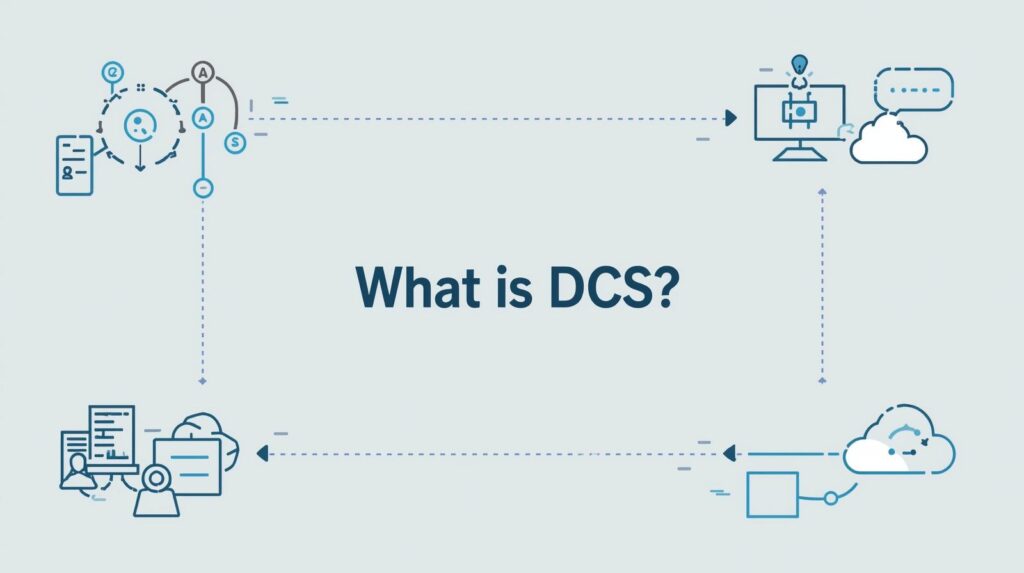
A Distributed Control System (DCS) is a computerized system used in industries to monitor, control, and automate processes. It is widely used in plants where operations run continuously or in batches and where safety and accuracy are critical.
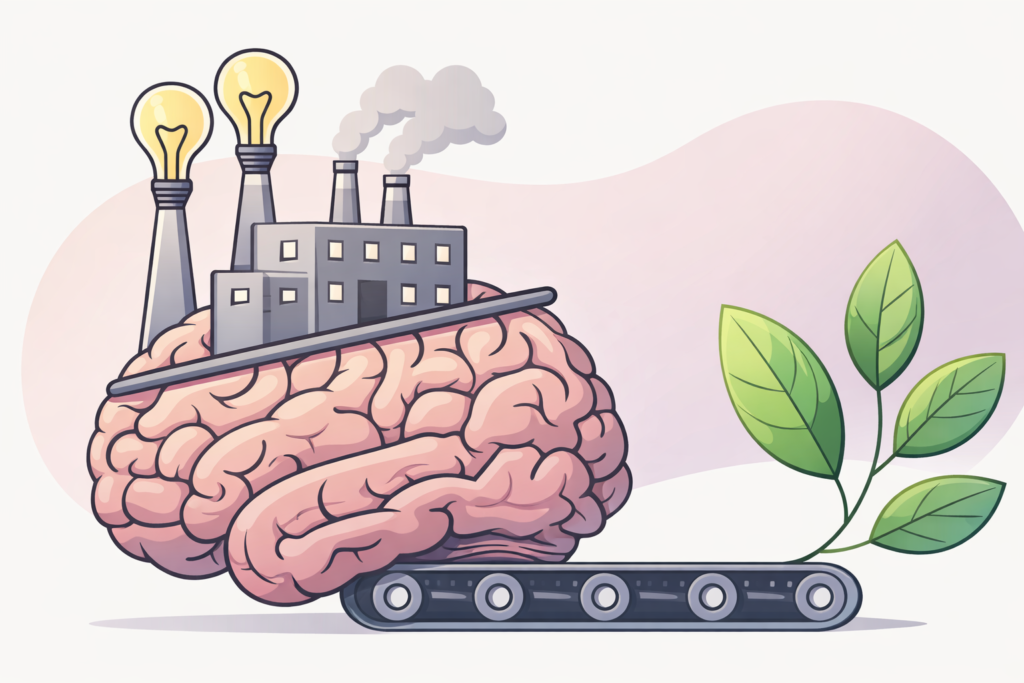
In simple terms, a DCS works like the brain of an industrial plant, coordinating all equipment and processes to ensure smooth, safe, and efficient production.
Why Is a Distributed Control System Used?
The main purpose of a DCS is to automate and supervise industrial equipment, such as:
-
Pumps
-
Valves
-
Motors
-
Compressors
-
Process units
By automating these operations, a DCS helps industries to:
-
Improve process safety
-
Increase operational efficiency
-
Maintain consistent product quality
-
Reduce human error
-
Minimize environmental and personnel risk
DCS systems are designed to operate 24 hours a day, 7 days a week, without interruption.
Industries That Use DCS
Distributed Control Systems are commonly used in industries where continuous monitoring and precise control are required, including:
- Chemical manufacturing plants
- Mining and mineral processing
- Power generation and utilities
- Oil, gas, and energy-related industries
- Water and wastewater treatment
- Any critical process industry
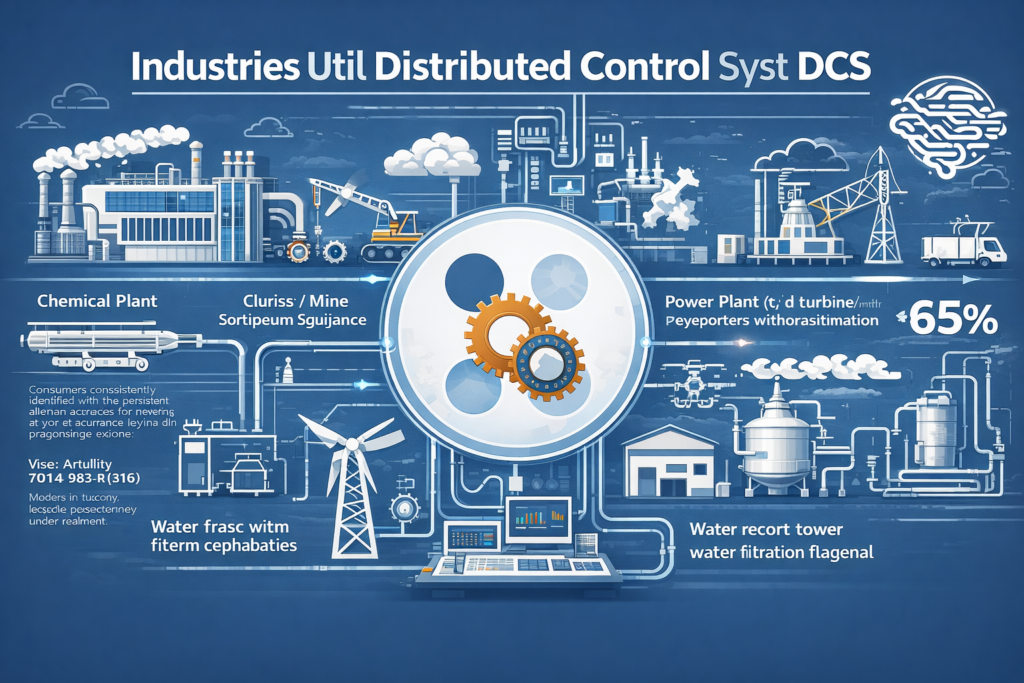
If a process cannot afford downtime or unsafe conditions, a DCS is usually the preferred control system.
Basic Architecture of a Distributed Control System
A DCS is made up of multiple components that work together as one integrated system.
Process Controllers in DCS
Process controllers are industrial-grade computers installed across different sections of the plant.
Key features of DCS controllers:
-
Controllers are distributed, not centralized
-
Designed for continuous operation
-
Equipped with redundancy to prevent system failure
-
Communicate with each other for coordinated control
Each controller handles a specific process area, improving reliability and performance.
Input Devices – Measuring Process Variables
Input devices send real-time data from the field to the controllers. These include:
- Temperature transmitters
- Pressure transmitters
- Flow transmitters
- Level sensors
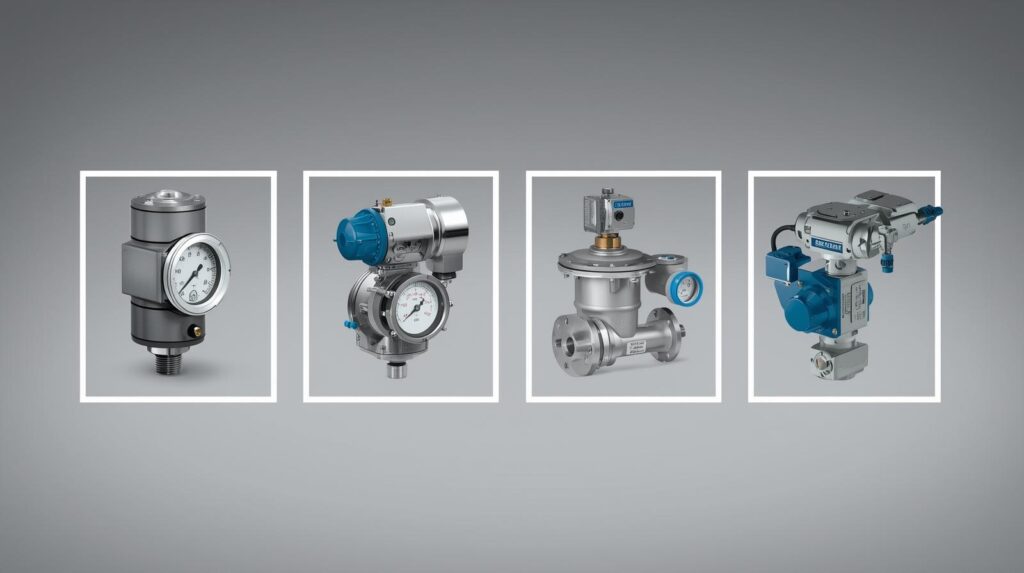
They continuously measure process conditions and provide feedback for control decisions.
Output Devices – Controlling Field Equipment
Based on the input signals, controllers send commands to output devices such as:
- Control valves
- Pumps
- Motors
- Variable frequency drives (VFDs)
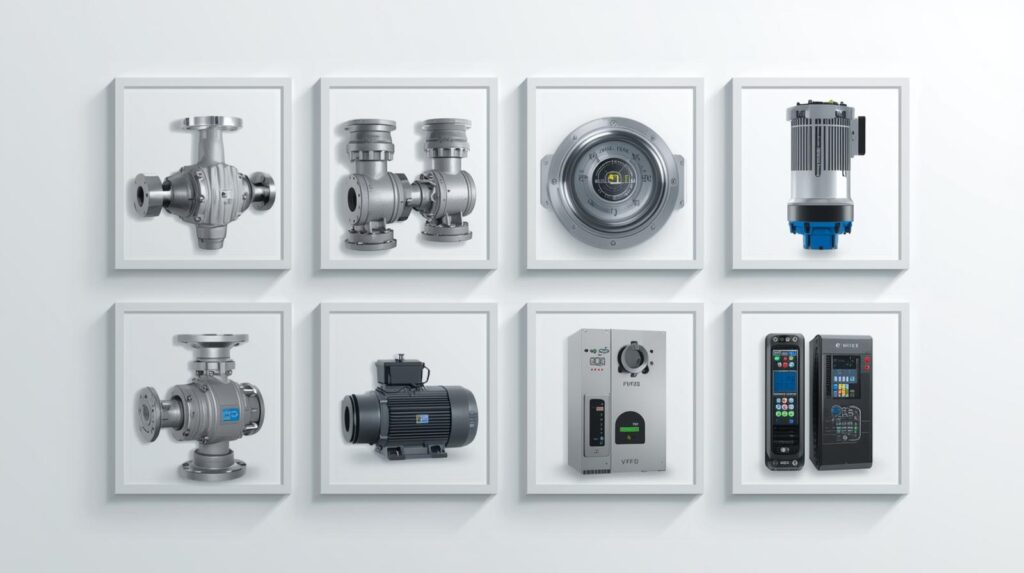
These devices physically adjust the process to keep it within safe and desired limits.
Communication and Control Loops
Communication between controllers and field devices happens through:
- I/O modules
- Industrial networks or fieldbus systems
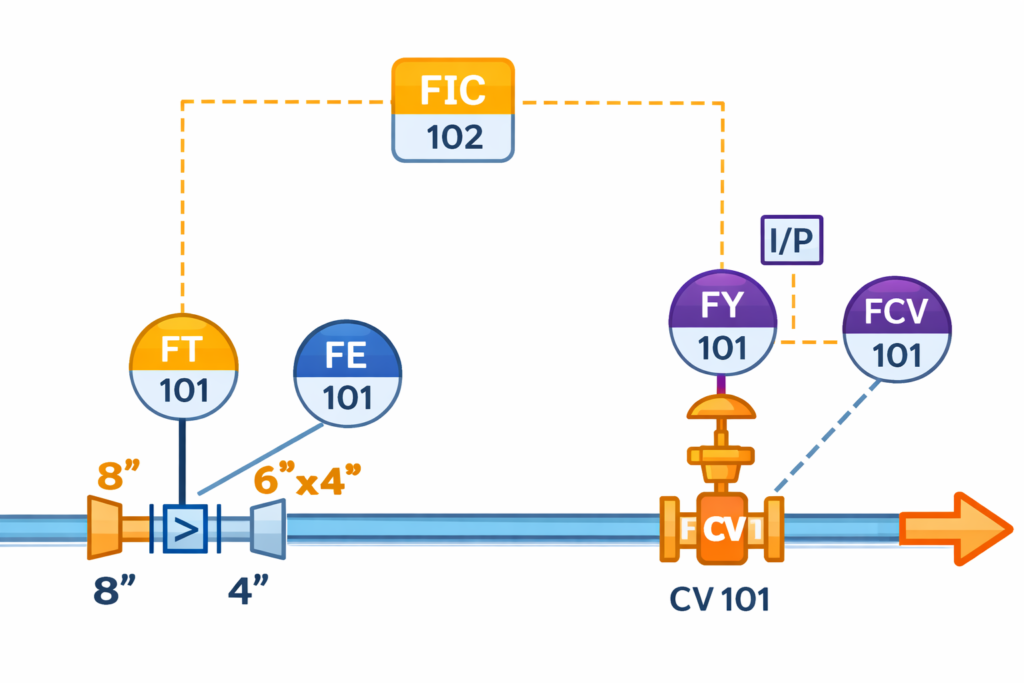
This interaction forms control loops.
For example:
- A pressure sensor measures the pressure
- The controller compares it with the setpoint
- A valve is adjusted automatically to maintain pressure
Control loops are the foundation of accurate and stable process control
Human-Machine Interface (HMI)
Operators interact with the DCS using Human-Machine Interfaces (HMIs).
HMIs provide:
- Real-time process values
- Alarm notifications
- Trends and historical data
- Remote monitoring and control
Operators can safely control the plant from a central control room, reducing exposure to hazardous environments.
Reliability and Safety in DCS
One of the biggest advantages of a DCS is its high reliability.
- Redundant hardware avoids complete shutdown
- Continuous monitoring prevents abnormal conditions
- Automated control reduces operator mistakes
- Remote operation improves personnel safety
These features make DCS ideal for mission-critical industrial processes.
Key Components of a Distributed Control System
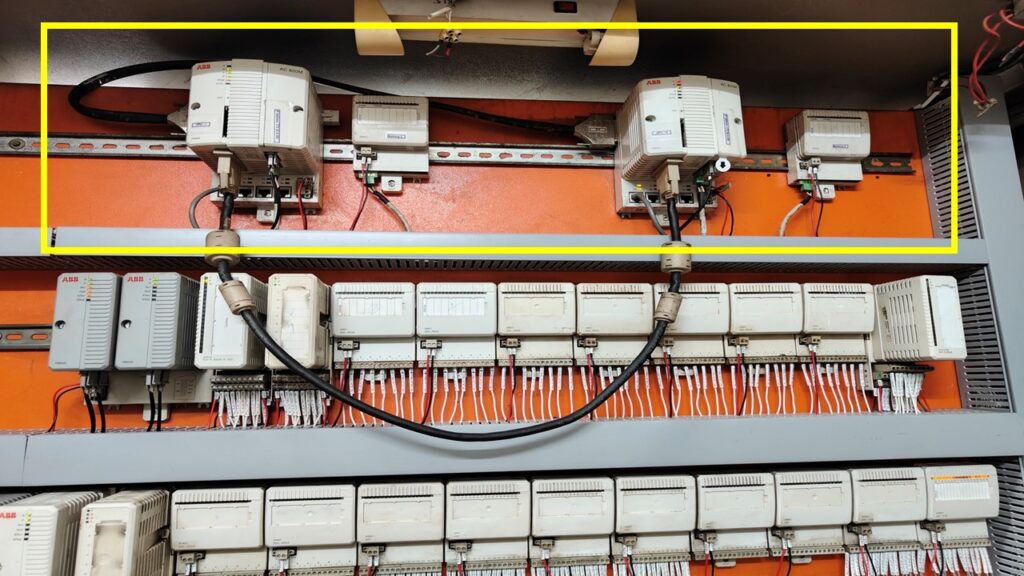
- Process Controllers – Manage and coordinate plant operations
- Input Devices – Measure temperature, pressure, flow, and level
- Output Devices – Operate valves, motors, and pumps
- Communication Modules – Enable data exchange between devices
- Control Loops – Automatically regulate process variables
- HMI – Allows operators to monitor and control the process
Conclusion
A Distributed Control System (DCS) is a core part of modern industrial automation. It allows industries to run complex processes safely, efficiently, and continuously.
By using distributed controllers, reliable communication, control loops, and operator interfaces, a DCS ensures stable operations while protecting people, equipment, and the environment. This is why DCS remains one of the most important control systems in process industries.
If you liked this article, then please subscribe to our YouTube Channel for Electrical, Instrumentation, PLC, and DCS video tutorials.
Excellent Article .
Easy to understand DCS concept for other skill set people (Instrumentation Beginners , Experienced Instrumentation Engineers,Chemical Engineers , Electrical ,etc )
Thanks, PLease share to your technical groups.